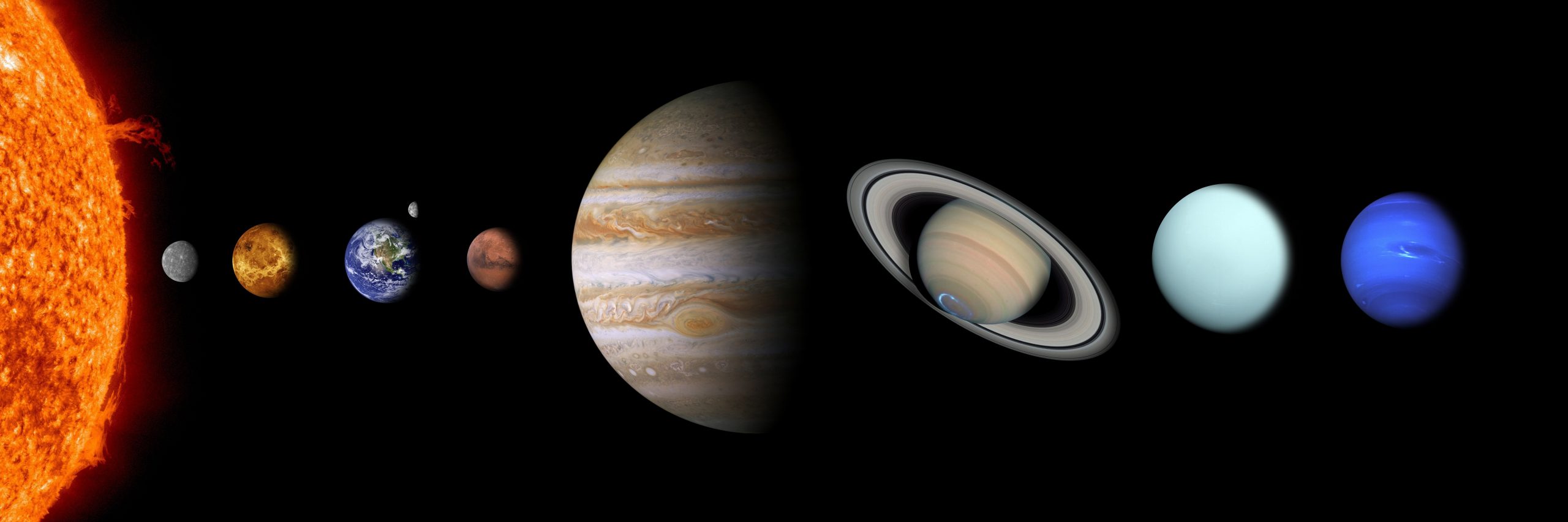
What came first, the gods or the named planets?
Well, actually, today the planets of the zodiac carry the names of Roman gods, but it was initially the Greeks who named them after their own pantheon of gods.
The earliest recorded astronomers, the Babylonian-Assyrians, were the ones to mentally and imaginatively arrange the constellations in the sky into patterns; often they saw animal shapes, or features of animals living around them. Witness today’s signs of the zodiac … the Greeks’ circle of animals … the Taurus-bull, Aries-ram, Pisces-fishes; or the scorpion of Scorpio (note that these names are Latin).
Even though the Babylonians originally named the stars and planets in their own language, the Greeks then renamed the planets after their mythological gods. The Romans arrived and they did the same ― these are the planet names we know today.
Giving Planets a Personality
Gods and goddesses, common to every cultural group around the world since humanity has existed, all have specific personality profiles and individual character traits. Always there is a wise all-knowing father-god, an empathetic loving protector-goddess, a naughty trickster-god, a dark malevolent power-wielding god.
Now, in astrology and the zodiac, since the planets share their names with the gods it is only natural that the planets take on the same energetic qualities and characteristics as the gods they’re named after. In my book Magical Number NINE (click here), Mercury and Neptune are two gods both making an appearance in the story. So … let’s look at Mercury.

Mercury
It is quite apt that this also is the word for an earth chemical with a silky, slippery, liquid malleability that is utterly elusive and hard to contain — beautifully symbolising the eloquent, persuasive, tricky nature of the god. To the Greeks, Mercury’s winged helmet and shoes made him the swift communicator, the news-bringer. As a zodiacal planet, Mercury is about movement, communication, connection, transferral of information. In reality, Mercury is the fastest-moving planet and the closest to the Sun (it moves 4 degrees each Earth day and takes about a year to circle the zodiac; the Moon, in comparison, moves roughly 12 degrees a day).
Mercury Retrograde
That said, planet Mercury also goes retrograde (it appears to be going backwards) three times a year. Most of us have experienced what happens during this time (whether we believe it or not) … major glitches in communication, misunderstandings, information not getting through, computer crashes and lost information. Where movement is concerned, travel plans are kaiboshed, mechanical breakdowns happen. All of this perfectly correlates to the mischievous prankster qualities attributed to the god Mercury.
But this retrograde phenomenon really is an optical illusion. As the Earth spins on its tilted axis and Mercury orbits the Sun, it appears at times that Earth is moving faster than Mercury; from the perspective of the planets it looks as if Mercury is going backwards (much like a fast-passing car in relation to a slower-moving car). In terms of glitches during Mercury retrograde … who knows? We have all observed the Moon’s gravitational effect on the tides, on weather (and even our own moods), so why shouldn’t Mercury’s proximity to the Earth also have an effect?
Neptune
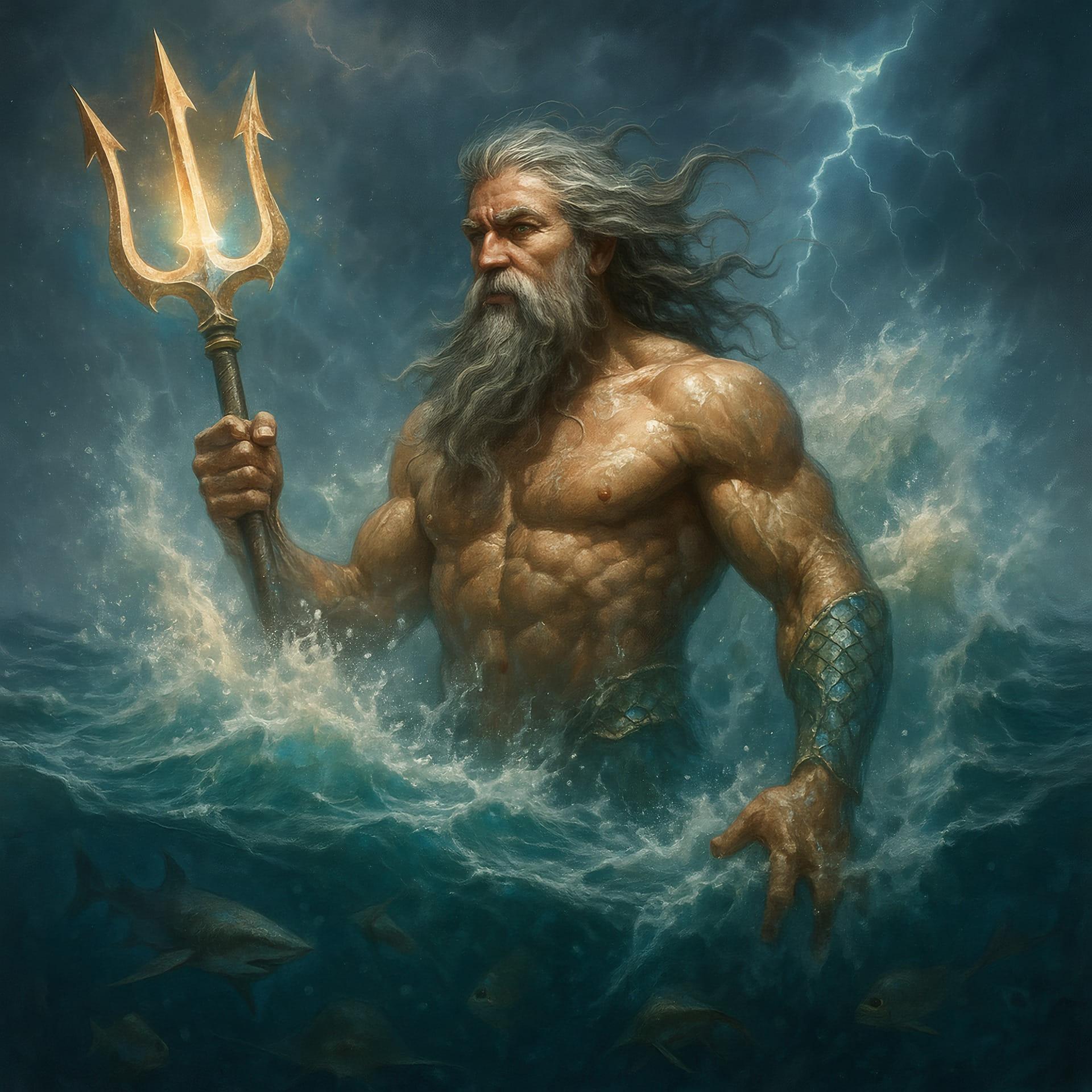
And now for Neptune: lord of the sea with its foam-spray, mists and storms. The Greek and Roman god (Poseidon to the Greeks) controlled and stilled the tempests or himself fomented the waters into surging storms. Water has always been a symbol of deep-seated emotion, fluidity of feeling, intuition, and sixth sense. Neptune the Planet is thus infused with these energies. When channelled effectively, Neptune is all inspiration and dreams, creativity, artistic ability. In negative form, the energies are nudged into escapism … alcohol, drugs and addictions. And just as the ocean undulates, surges and subsides, is fluid and dissolves, Neptune can represent mists and illusion, self-deception and delusion.
Planets with personality? The more you delve, the more fascinating it gets.