Image by Eliessa Bell (fallenlights.net)
In the diverse cultural myths from around the world there is such magic in the names people give to the forces of Nature. Generally the names are simply the foreign term for a natural phenomenon. For example, in Nordic mythology Aegir is a personification of the sea, and that’s exactly what his name means in Old Norse. Sea. But often, the names are lovely lyrical terms that describe how a natural element behaves. And there is no better example than the nine wave-daughters of Aegir and his wife Rán.
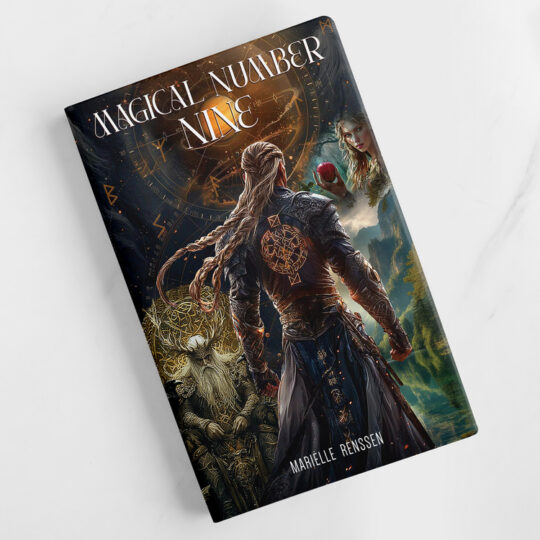
But, first, let’s meet Rán in an excerpt of my book Magical Number NINE.
As they steer their boat across the great ocean to find Thor and the frost giant, Triton fills his friend Lysandre in on Rán, once a giantess but now a feared sea goddess who rules over all those who drown ― often at her own hands. She has been known to cast her net over unsuspecting fishermen then drag them into her deep waters, and to smash boats against the rocks. Her name, after all, means to rob or plunder, Triton says. He spotted her once, sunning herself on a pinnacle that rose up from the ocean. He was stunned by her strange beauty. Her skin glowed with a blue tinge from the ice floes of the sea, her long hair was a browny-green, as wavy and textured as the kelps of the Arctic Ocean. She had a sense of the siren about her, he tells Lysandre. He had to be extremely wary of not being lured too close. And yet he was so transfixed he did find himself drawing closer and closer. Eventually he had gotten so close he could see her limpid eyes and eyelashes of the finest lace-coral. She wore rare black sea-pearls at her ears and around her neck.
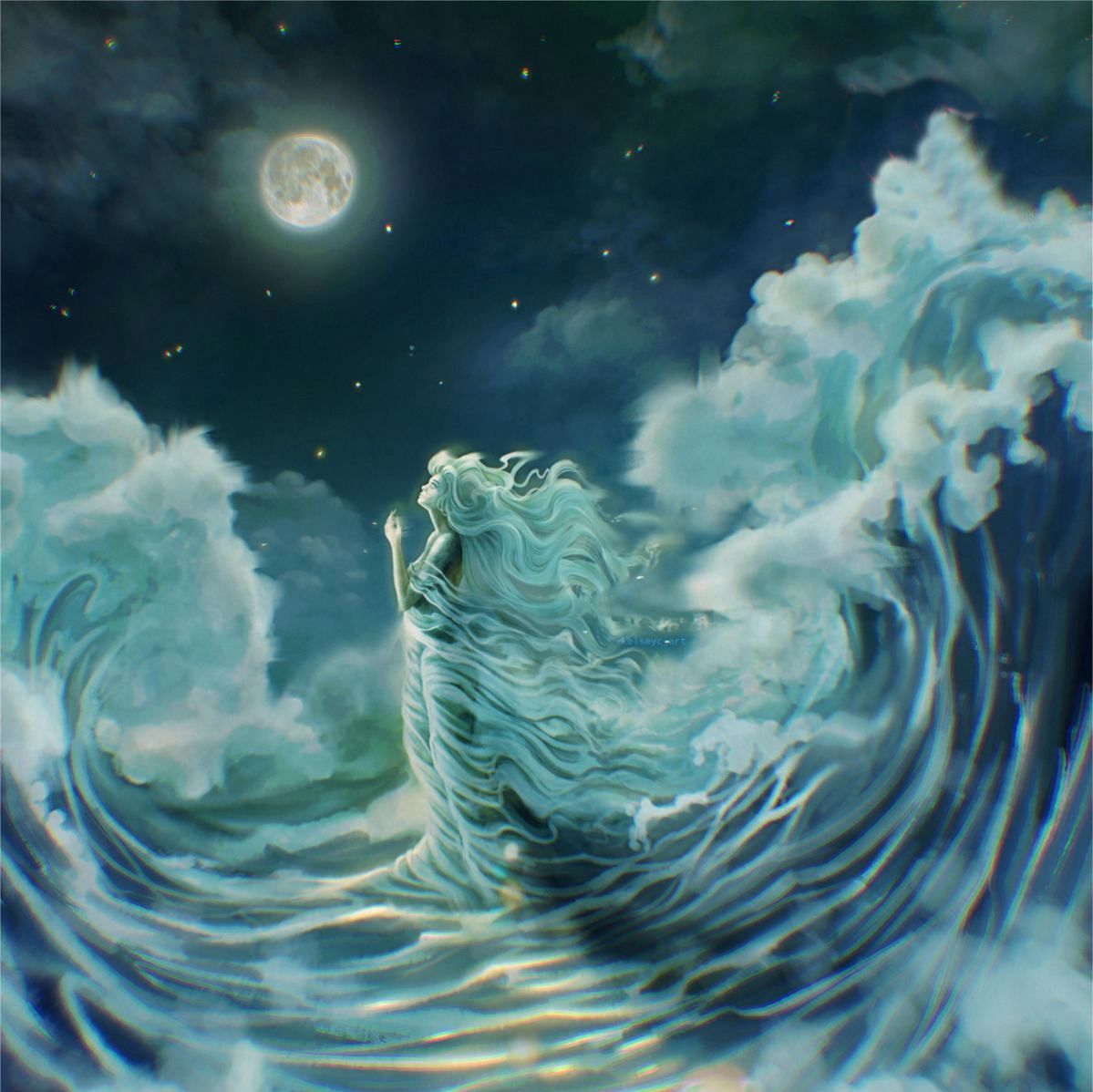
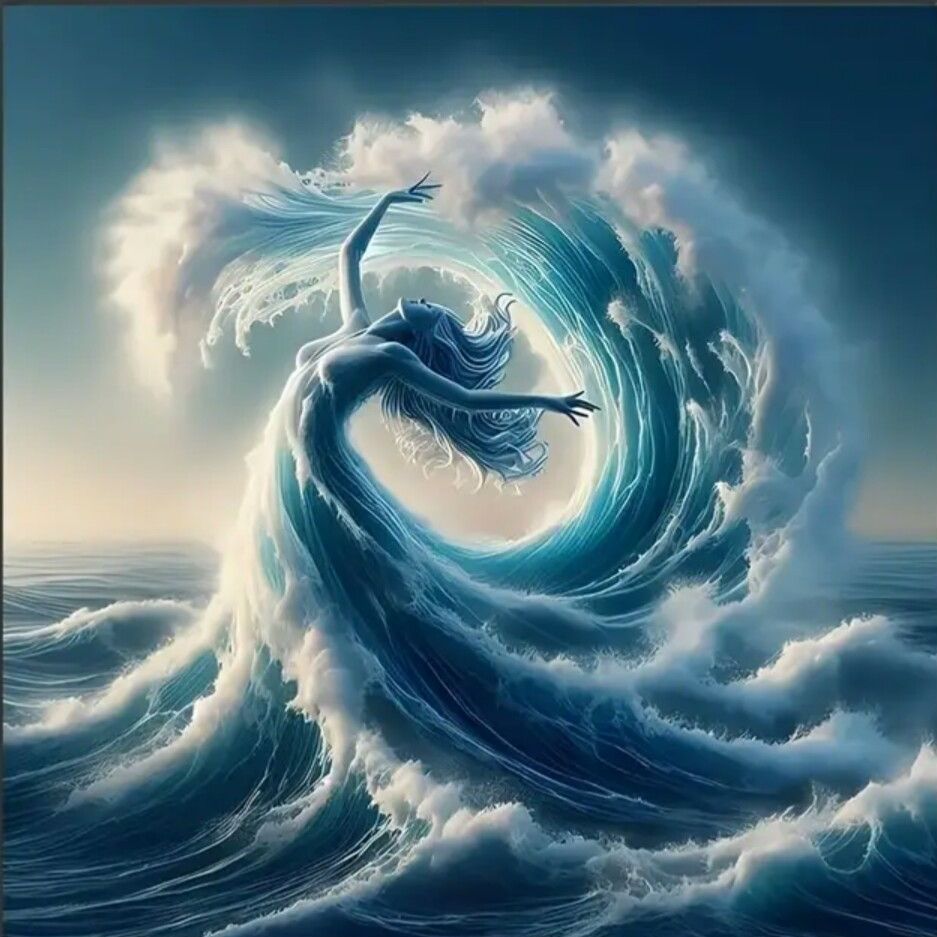
Image (left) by @kelseyc_art
Rán’s husband Aegir, also a giant, ensures the safety of all fishermen arriving from his homeland Jötunheim ― Land of Giants ― calming the tempests that rage across the sea. Sadly, he and Rán fight and argue often, so when he’s in bad humour the sea turns stormy. Massive swells churn, crests and troughs heave and fall, and foamy whitehorses skim across the tops of the waves. This is because Aegir is pushing over vessels and dragging them to the ocean floor.
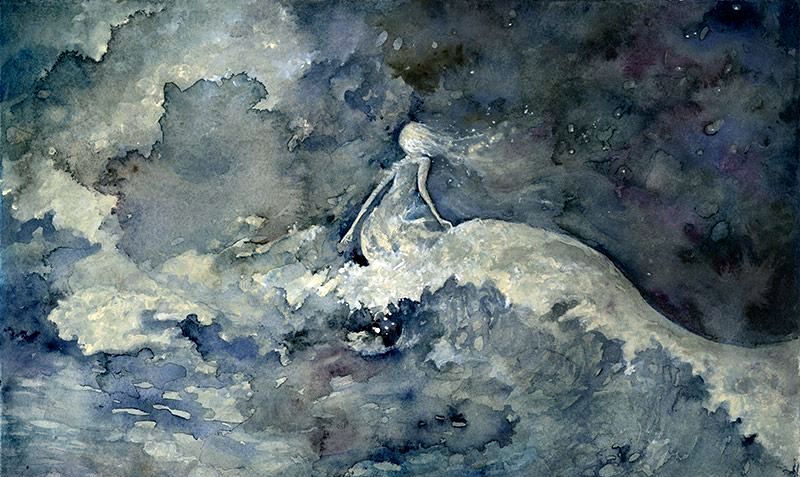
In spite of their bickering, Rán and Aegir’s union has produced nine beautiful wave-daughters. And in their musical names, lyrical syllables that dance and trip off the tongue, we learn about the quality and movement of water and waves. There is Dröfn, or Foaming Surf. Bylgja, or Billowing Wave. Himinglæva, or Glassy Wave. Udr represents frothy surprise surges, Dúfa pitching-rolling waves, Hefring rising and lifting waves.
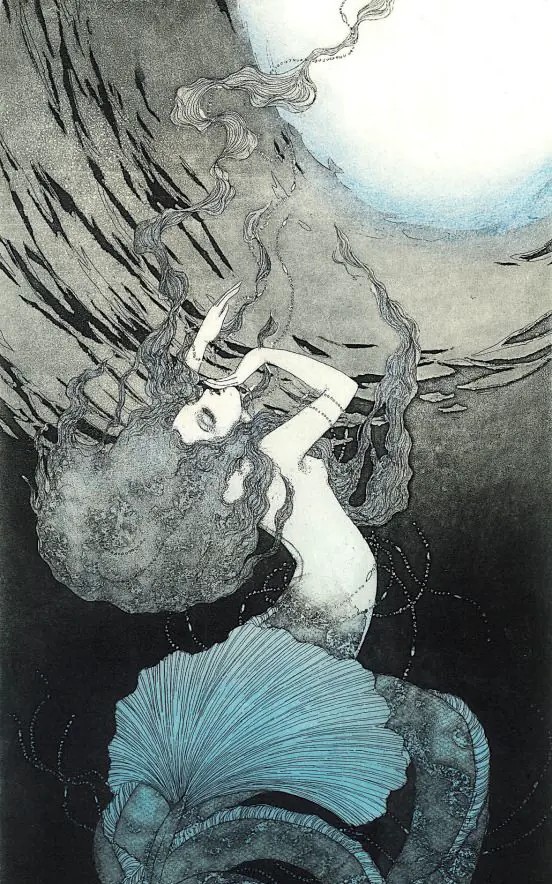
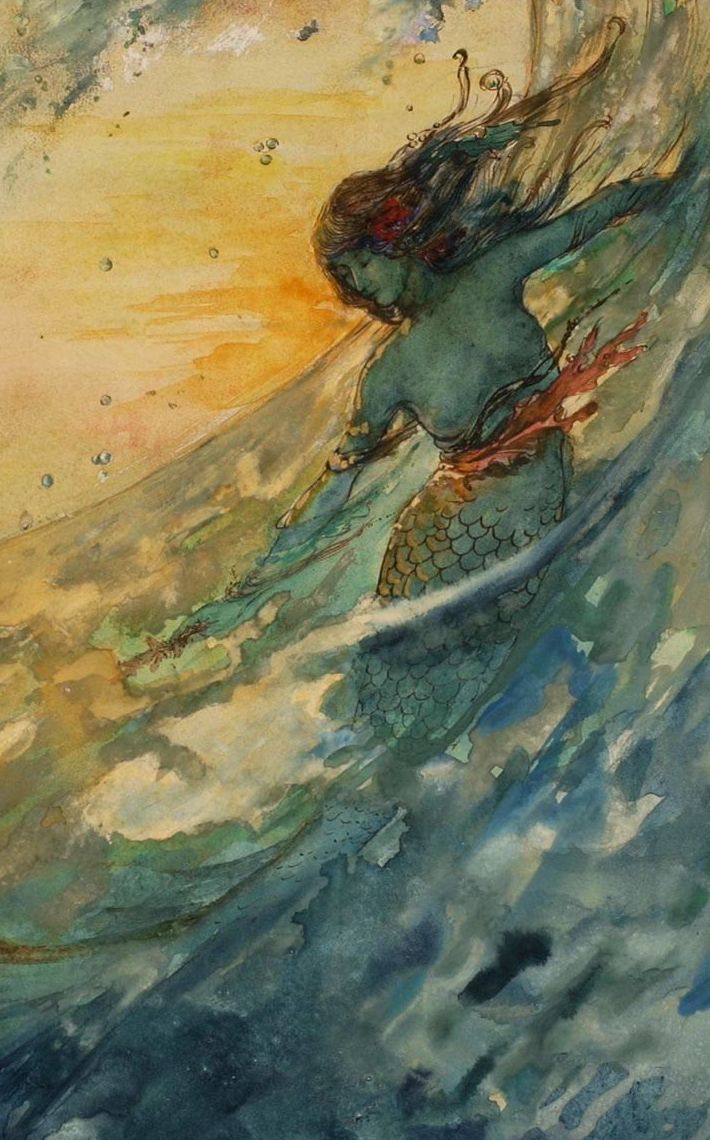
Image (left) by Yuko Morino
All quite magical, don’t you think?
If you like this and want to read the full story, click here to get the book.