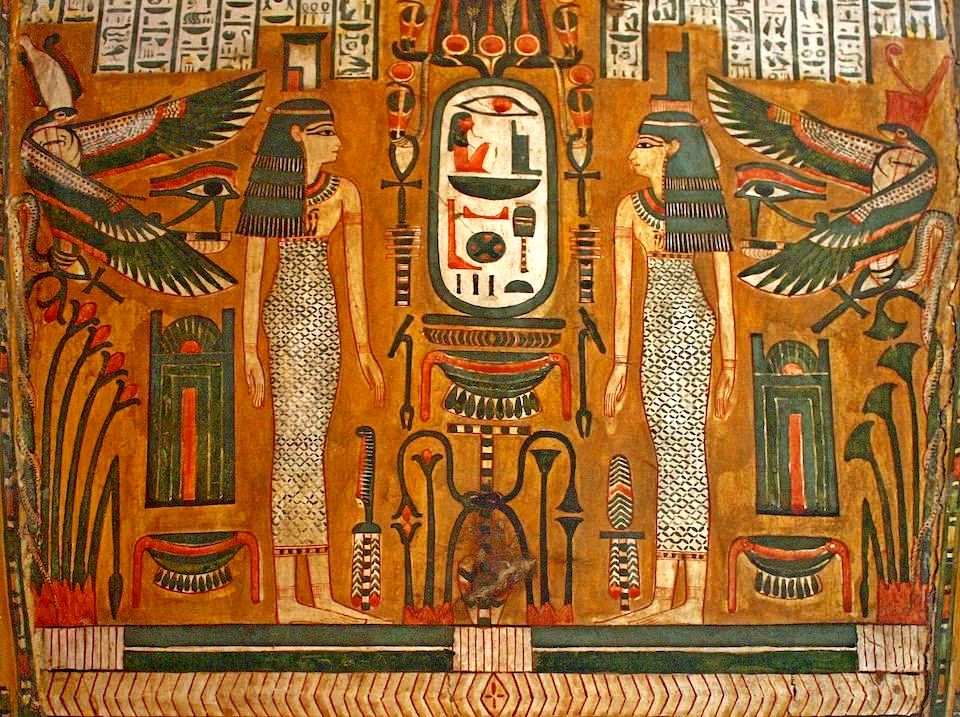
AN ASTONISHING FACT … the earliest signs of equality ― and respect ― between men and women lie in Ancient Egypt. Yes, Egypt was a patriarchal society. But the number of ruling queens and female pharaohs seems to indicate a greater nuance. And these women were powerful with a capital P! Names that immediately stand out are Hatshepsut, Nefertiti, Cleopatra. Just consider … the period during which women reigned starts as far back as 2950 BCE, with the regent queen Merneith (regent being a person appointed to stand in for an absent king) right through to Cleopatra’s reign which ended in 30 BCE.
That’s a period of 2920 years!
Ancient Egyptian records show that women owned, inherited, bought, and sold property. They controlled their own finances, supervised estates and managed businesses. Also, in these earliest of times, marriage was a mutually agreed partnership. The woman’s legal identity was separate from her husband’s and she kept her own property after marrying. This is all proof that men respected women, and acknowledged their contribution to the social order, spiritual foundation, and political authority of Egyptian society.
In the later Kingdoms, the most powerful women rulers were given the highest religious position … “God’s Wife of Amun.” Amun being a pivotal Egyptian deity of the city of Thebes. He was later fused with the sun-god Re, or Ra, to become Amun-Ra, supreme god of all men.
So … let’s look at a few of the most well-known powerful woman pharaohs.
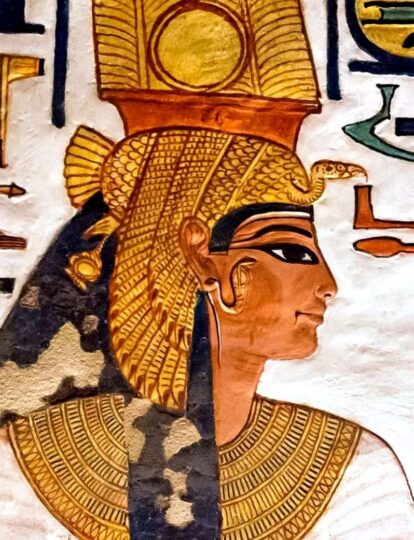
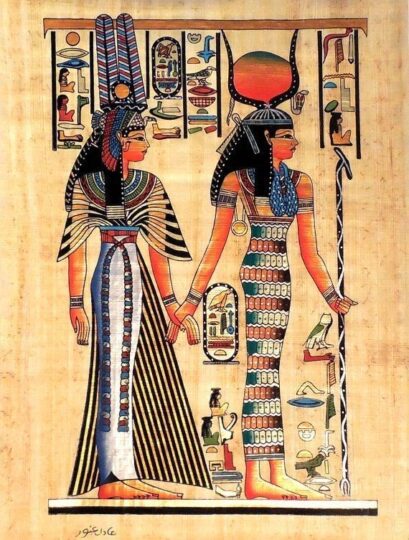
Sobekneferu
This is the first properly documented female Pharaoh. She was named after the crocodile god Sobek who, among his many attributes, also symbolised a pharaoh’s potency and power. Sobekneferu ruled for around 4 years during early 1800 BCE. Archaeology evidence has her named variously as “king of Upper and Lower Egypt”, “female Horus” and “daughter of Re”. She built temples and her father’s pyramid complex and, most importantly, was the first woman ruler to insist on wearing the male king’s headcloth, nemes, and false beard.
Hatshepsut
She is seen as one of the most successful pharaohs in Egyptian history. At the age of 12 she married her half-brother Thutmose II (seems to have been the done thing in those days) and became Queen of Egypt. When he died, she was nominated Pharaoh. Inspired by Sobekneferu, she wore the full traditional male clothing, including the schenty kilt.
Hatshepsut ran military campaigns, built a huge temple at Luxor, and famously set out on a sea journey to a land they called Pwenet (Land of Punt), believed to be today’s Somalia, to extend trade with Egypt. Hatshepsut reigned for 20 years.
Nefertiti
At first Nefertiti co-ruled with her husband Amenhotep IV; she is often painted wearing a pharaoh’s crown or conquering enemies in battle. The pair pushed successfully for the worship of only one god, the sun disk Aten (it’s believed the husband and wife were also priests). Amenhotep IV changed his name to Akhenaten, and together they ruled over the wealthiest period of Ancient Egypt.
When Akhenaten withdrew as Pharaoh, it appears that it was Nefertiti who stabilised the government and appeased the foreign powers involved with Egypt. She is believed to have ruled just before Tutankhamun‘s reign, although under a different name.
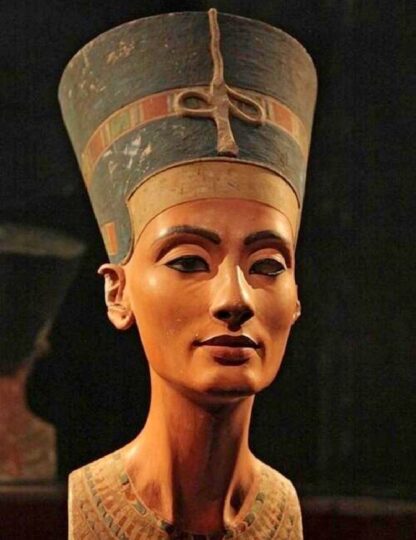
Nefertiti was a very beautiful woman, and her sculpted bust is one of the most copied artworks from Ancient Egypt.
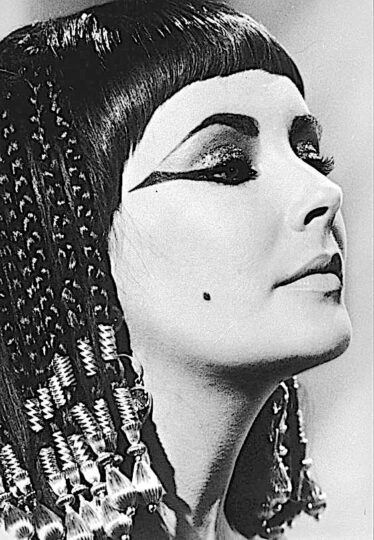
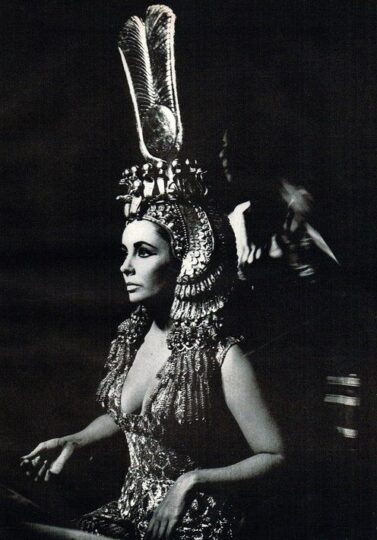
Actress Elizabeth Taylor in her famous role as Cleopatra
Cleopatra
Finally, who hasn’t heard of Cleopatra?! Actually, Cleopatra VII was Greek, not Egyptian, the daughter of Ptolemy XII. Her sharp intelligence extended to her fluency in languages which included Aramaic, Egyptian, Ethiopian, Greek, Hebrew and Latin. During a rule that spanned 51 to 30 BCE, she first co-ruled with her brother Ptolemy XIII, then Ptolemy XIV. She was a great politician, so after her second brother ousted her, she raised a mercenary army, then won the backing of Julius Caesar.
Cleopatra gained control of Egypt, had a son with Caesar, and after his death, became involved with Marc Anthony. Following their defeat (separately) by Augustus Caesar (or Octavian), first Marc Anthony then Cleopatra committed suicide.