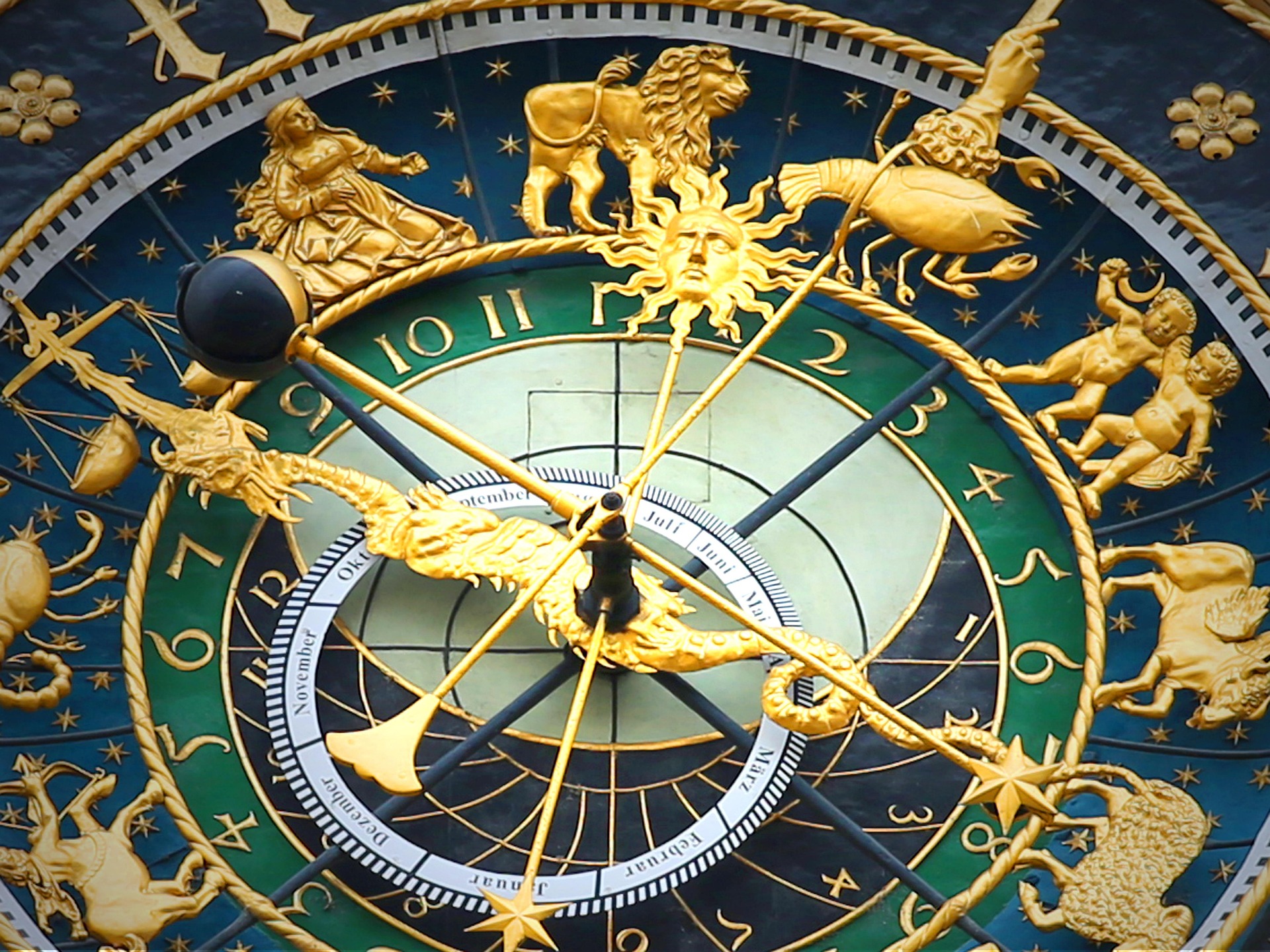
Where Astrology began
It is astounding how sophisticated different civilisations were in times so ancient they date back 4000 years before Christianity. Mesopotamia (the southern part of present-day Iraq) is said to be where earliest advanced civilisation began. And it was Babylon, controlled by the Assyrians around 1000 BCE, where night-sky observers began recording the positions of the stars daily, monthly, and yearly after having carefully watched their movement over many, many years. They’d also noted that the passage of the stars appeared to describe a circle in the sky and so devised a numerical system in which the circle was made up of 360 degrees.
We obviously know that the Earth revolves around the Sun even though to our eyes it looks as if it’s the Sun that moves, rising and setting over the Earth. Astronomers talk of this path as the Sun’s ecliptic, and it was along this curve that the Babylonians isolated twelve constellations. They allotted 30 degrees to each one, which amounted to a 360-degree circle.
So why twelve constellations? Simply because, after watching the Moon cycle through its phases, these early astronomers had noted that this took roughly 29.5 days. Also, that there were about twelve of these moon cycles across the passage of the seasons — our modern solar year.
Birth of the Zodiac
The Babylonian-Assyrians gave each constellation a figure, a name, and a specific meaning, but it was the Ancient Greek (and Roman) astronomers, building on the knowledge of Mesopotamian, Indian and Chinese star-gazers, who gave that circle of constellations the names we’re familiar with today. Many of the Babylonians’ star-groupings represented animals, so the Greeks called this zōdiakos kyklos, ‘circle of animals’. The Latin word became zodiacus. And so, for the first time, we had the astrological zodiac.
What we also inherited from the Ancient Greek astronomers was the word planet; the Greek term planētēs means ‘wanderer’, because these early ‘stars’ were not fixed like most of those in the night sky but instead moved through the cosmos at differing speeds. And so today we have Mercury, Venus, Mars, Jupiter, and Saturn. Later, the discovery was made of planets further away: Uranus, Neptune, and Pluto, which today all play a role in the zodiac.
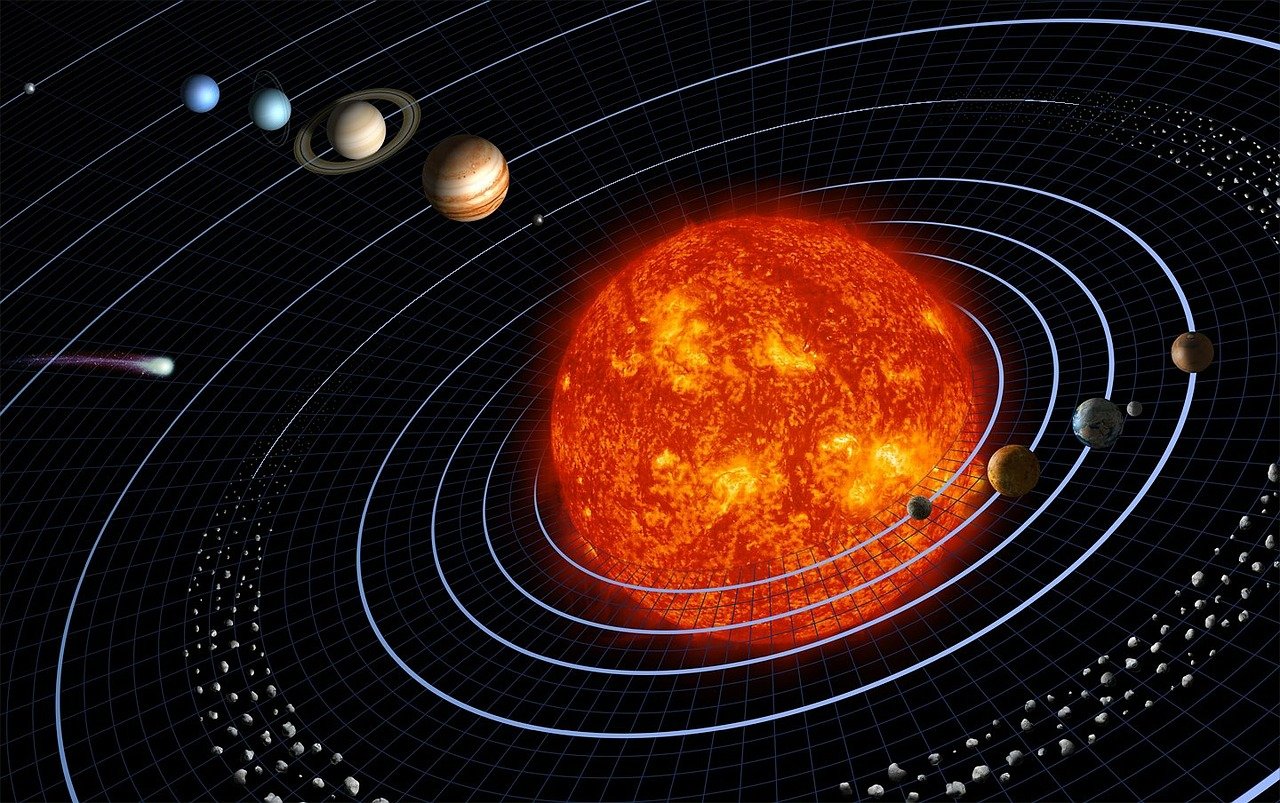
Roman Planet Names
The above names we’ve inherited are Roman. Originally, the Greeks used their pantheon of gods for planet names, and they also assigned to each relevant planet the gods’ individual characteristics and personality quirks. But afterward, the Romans renamed each planet according to their own names for the gods (for example, Hermes became Mercury). (Of course! Human nature …)
The art of astrology as opposed to astronomy which is based purely on science (planets don’t have personalities!) is to observe, for a particular human individual, the positions in the sky of both the planets and the zodiac constellations at the exact time of their birth (and it has to be exact to be accurate). That becomes the person’s birth (or natal) chart. Then, across the year, to observe how those planets move through the constellations in real time and what kind of angles they make to the zodiac signs, which sets up different energy patterns in that person’s life.